
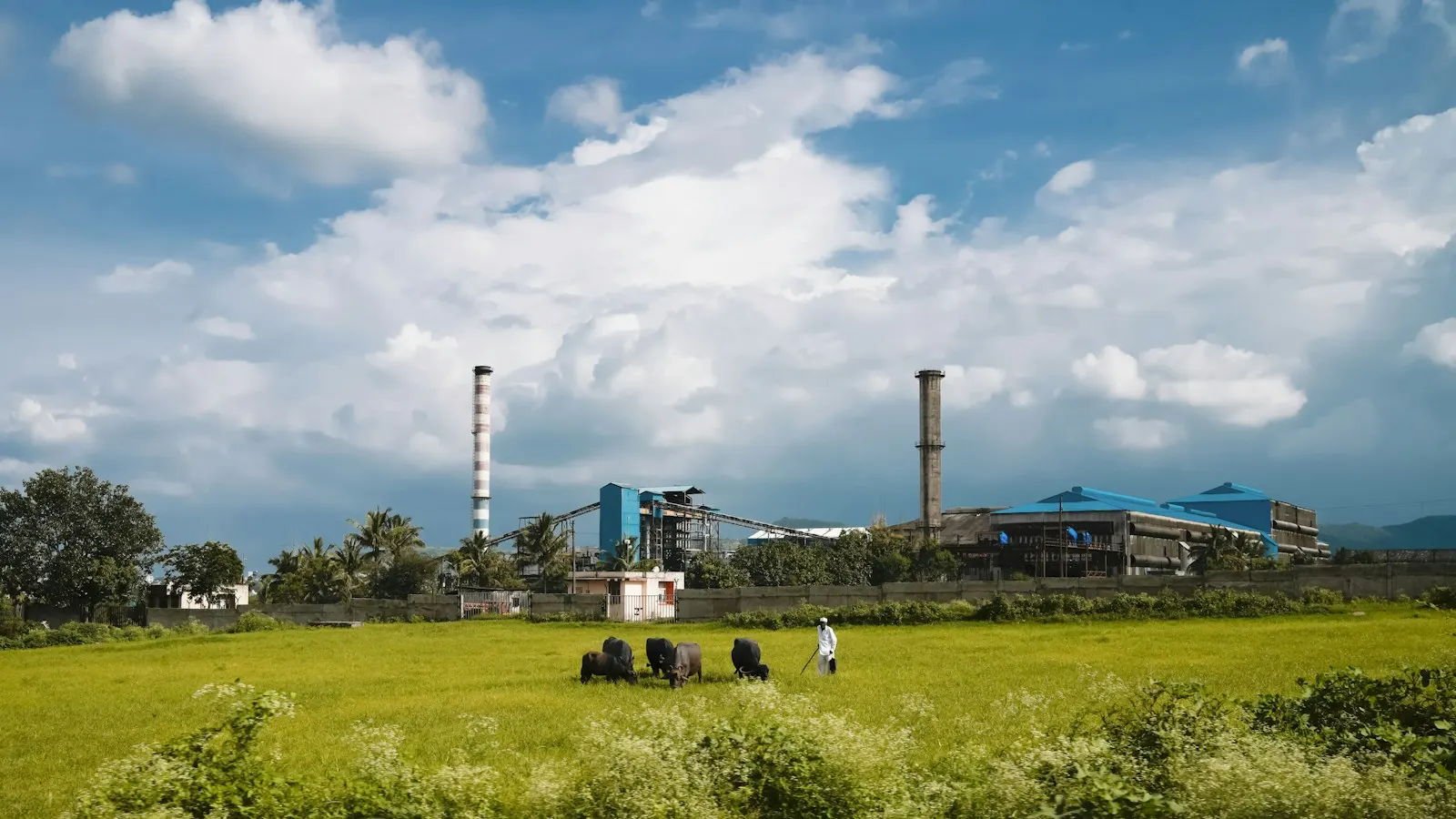
How consent to establish and operate works under every State Pollution Control Board — why Karnataka says CFE/CFO and Gujarat says CTE/CTO, what is the same nationally, and what to track.
A consultancy with clients in two states quickly notices that the paperwork has different names. In Gujarat it's a CTE and a CTO; in Karnataka the same pair is a CFE and a CFO. The names change, but the law underneath is the same everywhere — and so is most of what a consultant has to track.
The national law behind every state consent
Consent comes from two central Acts. The Water (Prevention and Control of Pollution) Act, 1974 requires a unit to obtain the State Board's consent before establishing or operating anything that discharges effluent, and the Air (Prevention and Control of Pollution) Act, 1981 does the same for emissions. Each state's Pollution Control Board — or, in Union Territories, the Pollution Control Committee — administers them.
What each state calls its consents
| State | Board | Before building | To operate |
|---|---|---|---|
| Gujarat | GPCB | Consent to Establish (CTE) | Consent to Operate (CTO) |
| Maharashtra | MPCB | Consent to Establish | Consent to Operate |
| Karnataka | KSPCB | Consent for Establishment (CFE) | Consent for Operation (CFO) |
| Telangana | TSPCB | Consent for Establishment (CFE) | Consent for Operation (CFO) |
| Andhra Pradesh | APPCB | Consent for Establishment (CFE) | Consent for Operation (CFO) |
| Tamil Nadu | TNPCB | Consent to Establish (CTE) | Consent to Operate (CTO) |
| Rajasthan | RSPCB | Consent to Establish | Consent to Operate |
| Madhya Pradesh | MPPCB | Consent to Establish | Consent to Operate |
| Uttar Pradesh | UPPCB | Consent to Establish | Consent to Operate |
| Haryana | HSPCB | Consent to Establish | Consent to Operate |
Some boards combine consent with hazardous-waste authorisation into a single consolidated document — Gujarat's CCA is one example. Check how your client's board issues it before you set up their records.
What is the same in every state
- Categories. CPCB's 2016 Red, Orange, Green and White classification is used across states — see our category explainer. Each board sets its own consent validity and fees per category.
- Form-V. The annual environmental statement is due by 30 September under Rule 14 of the Environment (Protection) Rules, 1986 — in every state.
- Hazardous waste. Authorisation and the Form 4 annual return (due 30 June) come from the Hazardous and Other Wastes Rules, 2016.
- Environmental Clearance. Projects listed in the EIA Notification, 2006 need EC from MoEFCC or the state SEIAA, with half-yearly compliance reports due 1 June and 1 December. See the EC process guide.
What changes from board to board
- Consent validity for each category, and the fee slabs
- The online portal and the documents it asks for — many boards use online consent management systems, Gujarat uses XGN
- Local conditions written into consents: zero liquid discharge for Tamil Nadu dyeing units, Ganga-basin rules for UP tanneries, GRAP restrictions for NCR units in Haryana and UP
- How early a renewal must be filed before expiry
Tracking consents across several states
The hard part of multi-state work isn't the law — it's that every client's dates, documents and conditions live in a different place. EnvironDesk keeps each consent as a record with its type, board and expiry, puts every one on a single calendar, and sends reminders at 60, 30 and 7 days before expiry and on the day, by WhatsApp and email. Lab reports are checked against CPCB and NAAQS limits whichever state the factory is in.
Pages for each board: Karnataka, Maharashtra, Tamil Nadu, Telangana, Andhra Pradesh, Rajasthan, Madhya Pradesh, Uttar Pradesh, Haryana and Gujarat.
Get the free GPCB compliance checklist
Every clearance a Gujarat factory needs, with document lists and renewal timelines. 12 pages, no charge.
Vishal Mevada
Co-founder, EnvironDesk
Vishal spent nine years running environmental compliance for factory clients across Gujarat's GIDC estates before starting EnvironDesk. He has filed more CTO renewals than he cares to count.
General information, not legal advice. Environmental regulation changes, and how a rule applies depends on your unit's category, location and consent conditions. Verify anything decision-critical against the current GPCB or CPCB position, or take professional advice.
Related reading
All articles → Checklist2 min read
Consent to Operate Renewal: A Checklist That Works in Every State
The documents, records and timeline a consent to operate (CTO / CFO) renewal needs under any State Pollution Control Board — and the mistakes that delay it.
Read more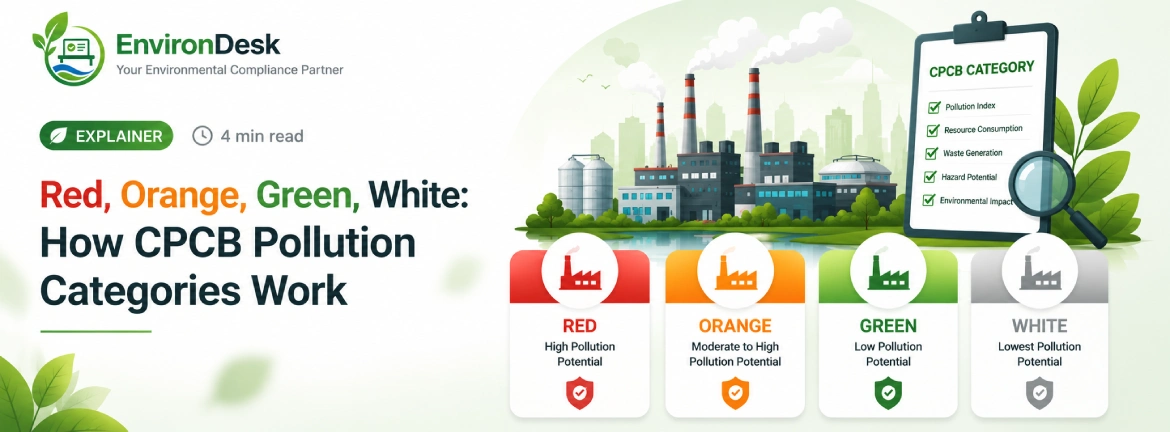 Explainer4 min read
Red, Orange, Green, White: How CPCB Pollution Categories Work
What CPCB Red, Orange, Green and White categories mean, how the pollution index decides yours, and why your category drives consent validity and fees.
Read more